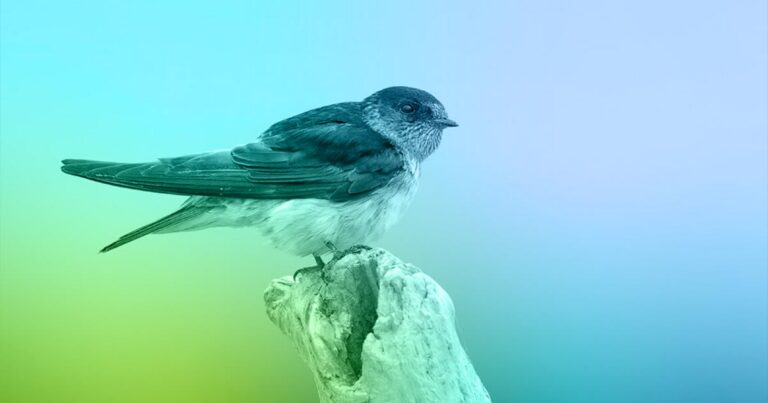
Now that might sound a little obscure, a bit like the Bridgekeeper’s question to King Arthur in Monty Python’s Holy Grail: ‘What is the airspeed velocity of an unladen swallow?’ The old Bridgekeeper’s inability to answer Arthur’s counter-question, ‘African or European?’ launches the old man into the ‘Gorge of Eternal Peril’.
We’re not suggesting that a failure to calculate your local bird population’s impact forces will have similarly immediate and catastrophic consequences, but it does provide perspective.
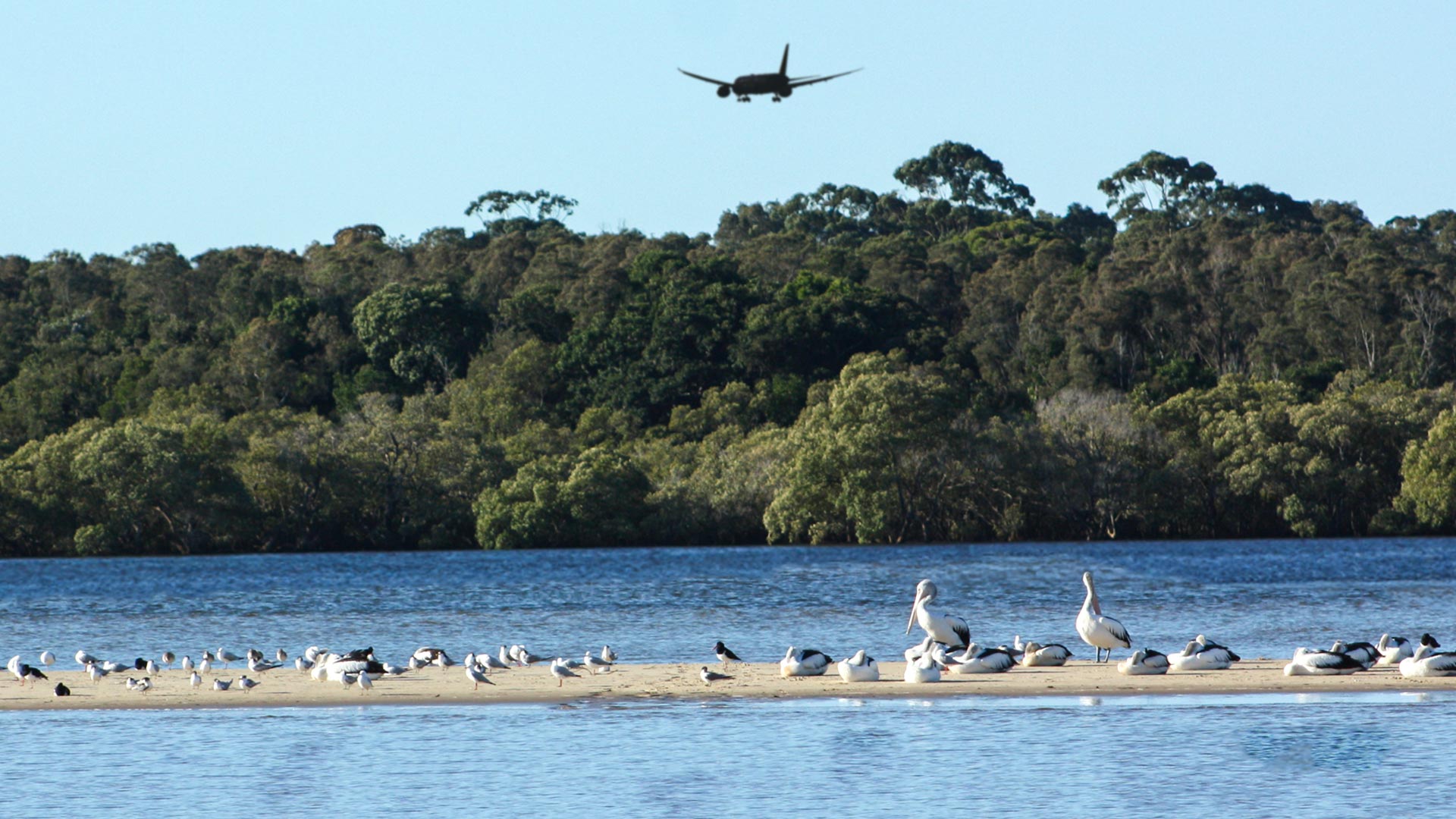
Take the photo above – the sort of data you might capture doing surveys of birds on or in the vicinity of an airport. At a rough count there are:
- 16 pelicans weighing 5kg each
- 30 gulls weighing 300g each
- 10 oystercatchers weighing 700g each
- 10 terns weighing 100g each.
totalling a combined mass of just under 100kg. In 2003, the Australian Transport Safety Bureau released a report ‘The hazards posed to aircraft by birds’ which contains a table (below) calculating impact forces. It takes into account not only the mass/weight of different bird species, but to give a more accurate picture, their diameter and density; as well as showing how the impact force varies according to aircraft speed.

The birds listed range in size from starlings (weighing 85g) to ibis (1.8kg) and pelicans (5kg). As can be seen from the table, birdstrikes can result in substantial forces being exerted on an aircraft. Even small birds such as starlings can exert up to 4.6 tonnes of force on an aircraft if struck at high speeds. Returning to our photograph, if the gulls at 300g strike an aircraft such as a B-737 or A-320 with an approach speed of around 140 knots, their potential impact force is from 0.3 to 2.1 tonnes. Given the fact that gulls tend to fly in flocks, that figure could be considerably higher.
The table also illustrates why large birds, such as pelicans and eagles, are very hazardous to aircraft. If a pelican is struck by an aircraft travelling at that same approximately 140kts, the impact force could be up to 13.7 tonnes.