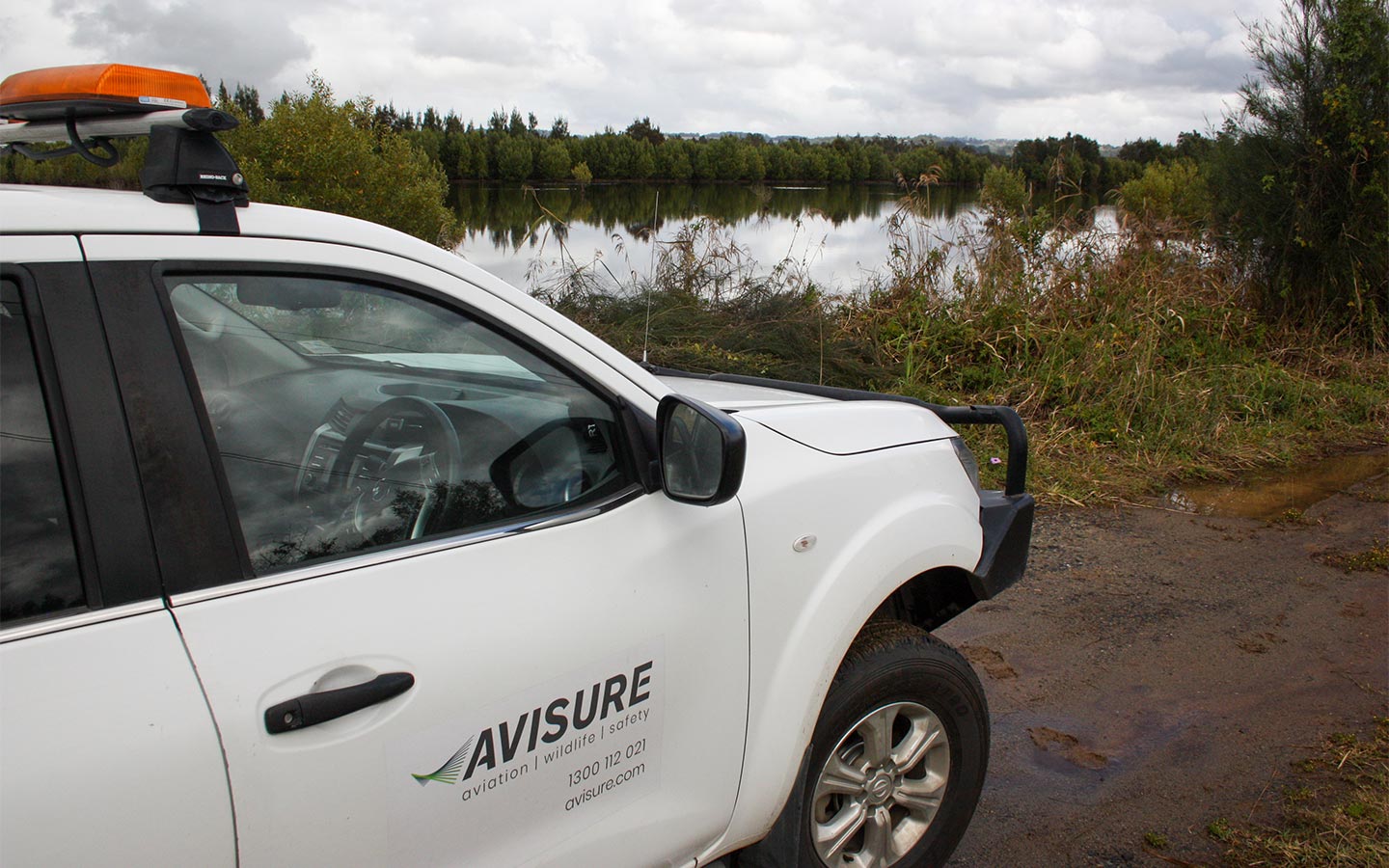
These weather extremes can have a significant impact on wildlife hazard management. In the dry, any permanent water lying on airfields is an attractant for thirsty wildlife and needs careful monitoring and management.
Dispersing wildlife with pyrotechnics in areas of sun-bleached dry grass calls for extra caution too, as grassfires can start from bird scarer shells. Consider where you are firing – away from long, dry grassed areas. Recent record-high temperatures have been perfect for curing grass, and the more cured the grasses are, the more intensely they burn and the more quickly the fire spreads.
Driving vehicles in long grass can also be problematic: hot engine parts or exhausts have started numerous fires, so it pays to check underneath the vehicle for trapped vegetation and not park with the exhaust in contact with any dry grass.
It also pays to have an appropriate extinguisher in the vehicle.
In the aftermath of the flooding rains the north has experienced, bird behaviour will be affected. New bodies of water and waterlogged soils create a foodfest, as worms and insects are flushed to the surface, and the softer ground makes foraging easier. Birds take advantage of any ponds created by the rain for drinking and bathing, and if the rain has been sustained, and food and water are plentiful, it may also encourage a breeding boom.