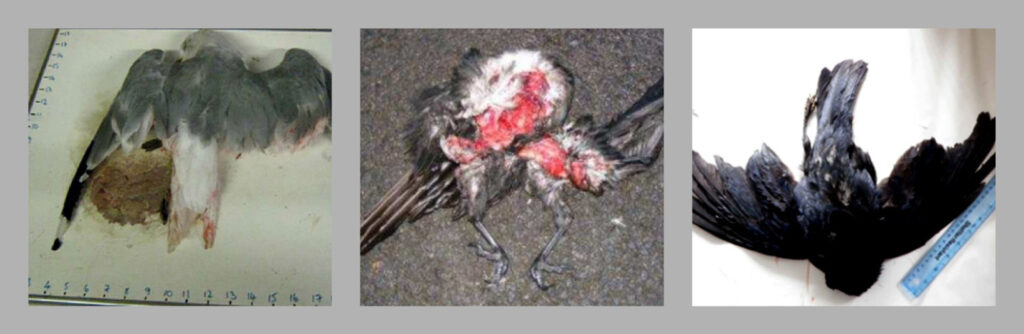
Avisure is pleased to be able to offer Australian aerodromes a free wildlife identification service. We can assist with identifying species involved in wildlife strikes via photos of carcasses and remains.
A few things to remember
Safety first!
- Dead animals may carry harmful diseases; e.g. flying foxes and Australian Bat Lyssavirus.
- Make sure you wear protective clothing, e.g. sturdy gloves, when handling carcasses and animal remains.
- Be careful not to contaminate clothing or work areas. If you are using a ruler to show scale in a photograph, make sure you clean it thoroughly with sanitiser or disinfectant.
- Wash your hands thoroughly with soap and water when you are done, and carry hand sanitiser in vehicles.
- Dispose of the carcass or remains safely.
Photographs must be of a good quality!
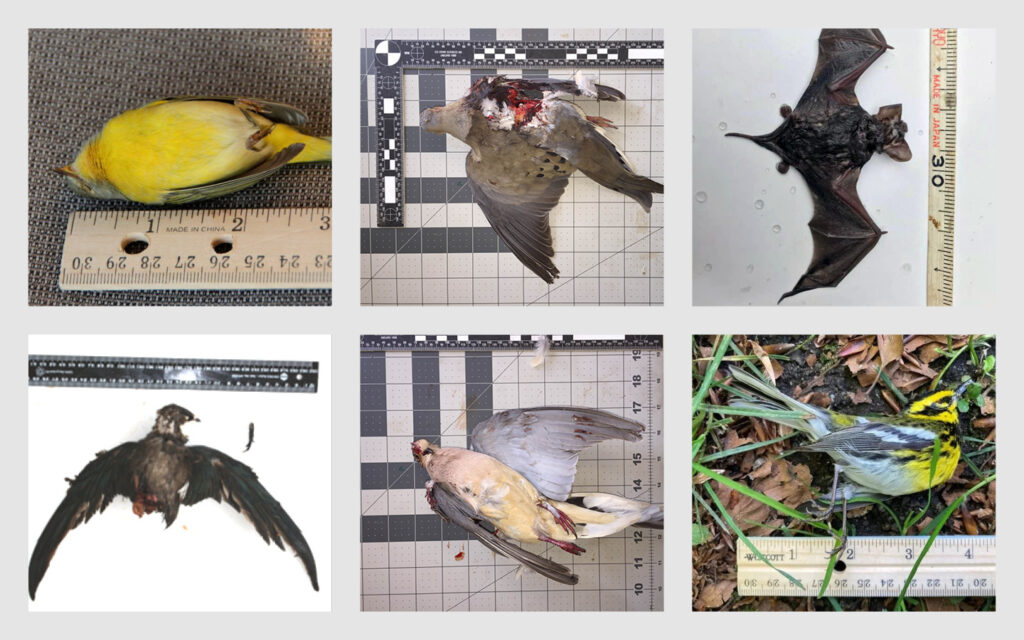
- Include a scale to show the overall size of the bird or animal, as well as features such as beak, head, feet, wingspan, tail, crest etc.
- Place the carcass or remains on a plain, contrasting background to highlight colours and patterns.
- Photograph the carcass/remains from a variety of angles: from above, on the side, underneath the body.
- Take close-ups—of the head, beak, feet, tail, crest (if applicable). Most recent-model mobile phones have the capacity for close-ups; just make sure you have the feature in focus.
- And talking of focus: carefully focus all your photographs—it may be necessary to take the photo in a sheltered position out of the wind etc.
- When taking the photos, make sure your camera/phone is set to capture a decent file size—at least one MB or more is preferable, to enable moderate to high resolution showing the necessary detail.
- Photograph the carcass or remains in good, even light, (natural or artificial). Don’t photograph with the carcass half in shade.
- Save the images with your airport name in the title and number them in sequence:
e.g. coomaairport1.jpg, coomaairport2.jpg.
Examples of good images
Examples of poor images