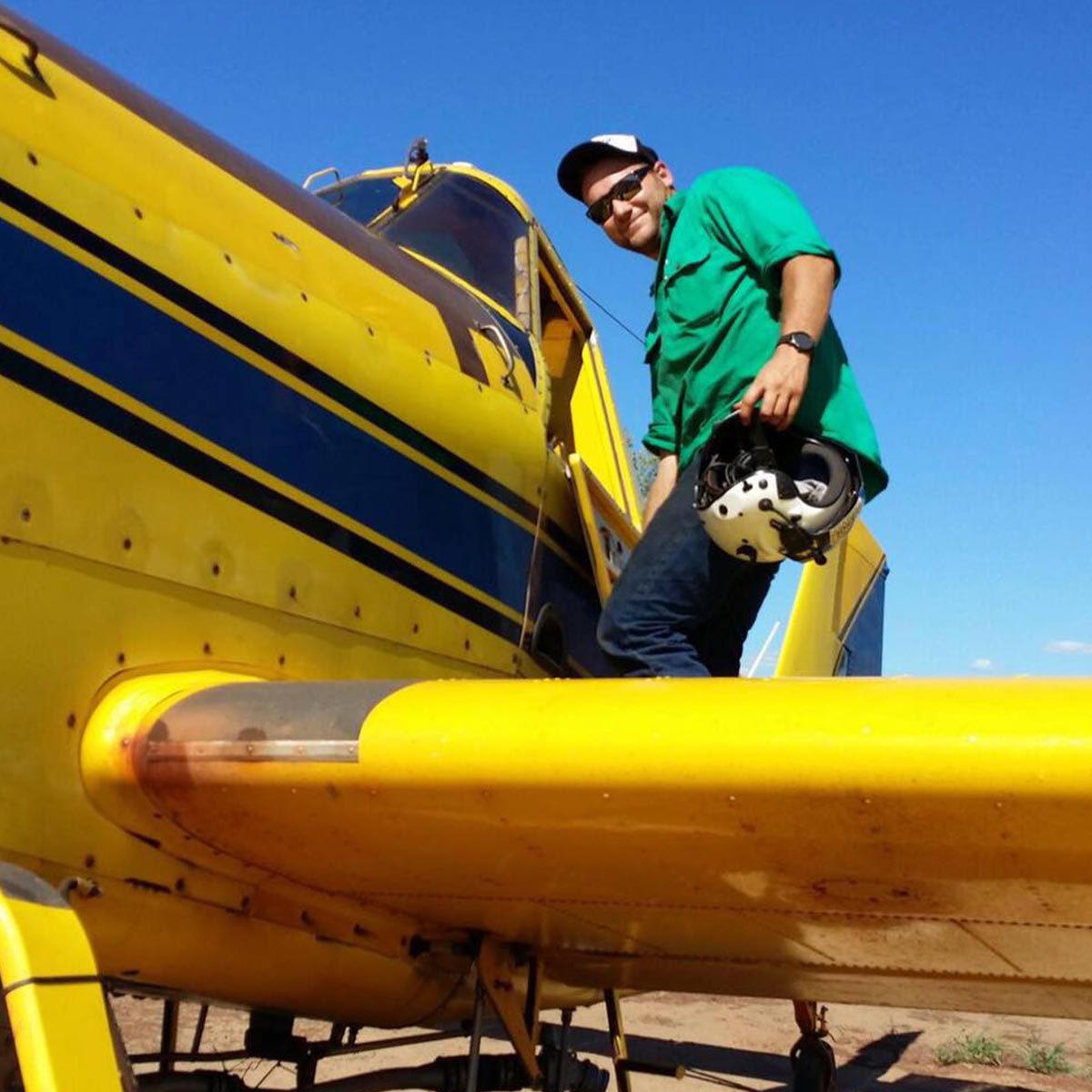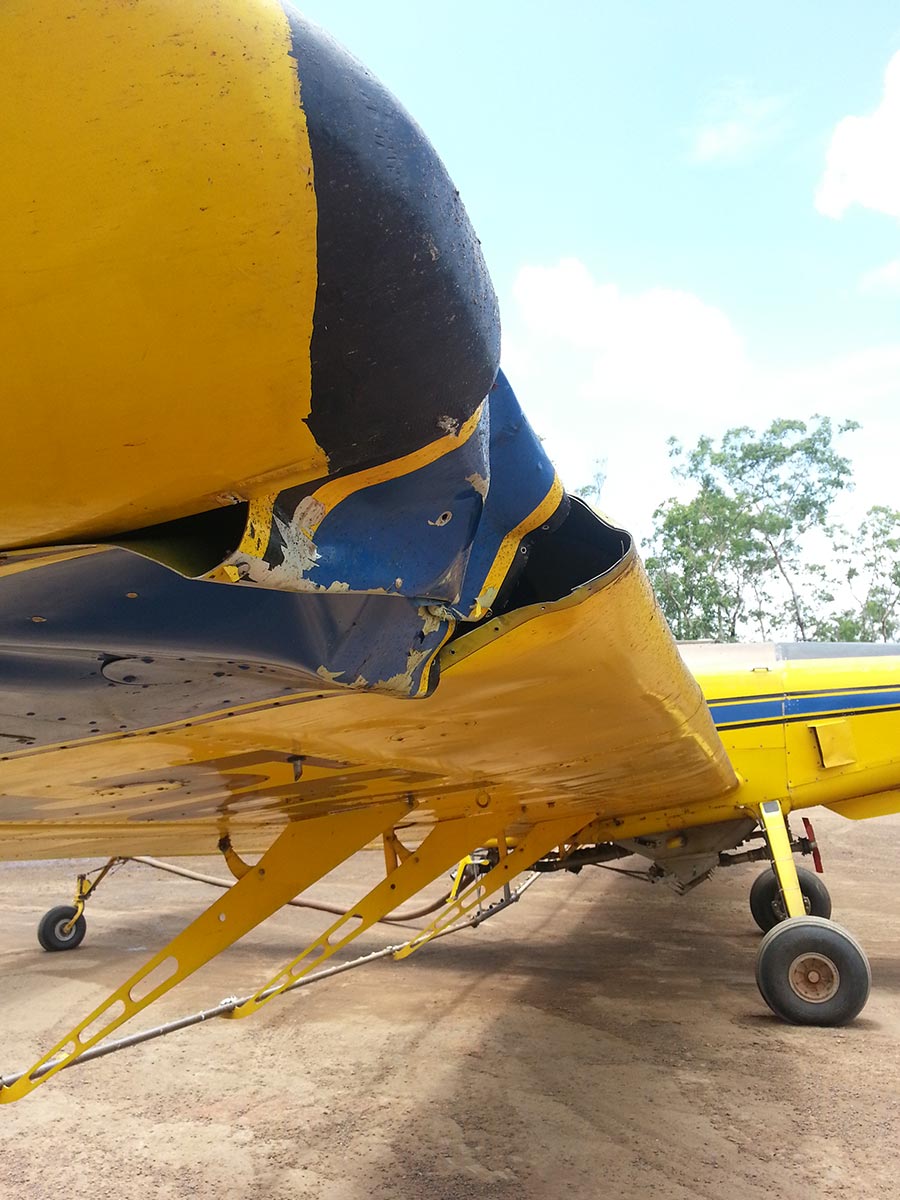
Even more so given that Andrew works from the Coorong region of South Australia, a renowned wetland area on the coast of South Australia, which is home to over 200 species of birds: local species as well as migratory wading birds.
‘Near home there are pelicans everywhere – they’re really easy to spot – there’s no need to transit too low. You just have to avoid the environment they live in: we try to fly neighbourly, avoid sensitive areas, such as the national park and coastal areas and work out the quietest way to do the job.’
On every application job, Andrew said, ‘you need to have a good look around, and know the locations’, what birds are in the area, and how they are likely to behave. Know which flocks of birds tend to stick together, which species are slower and more predictable in their movements.
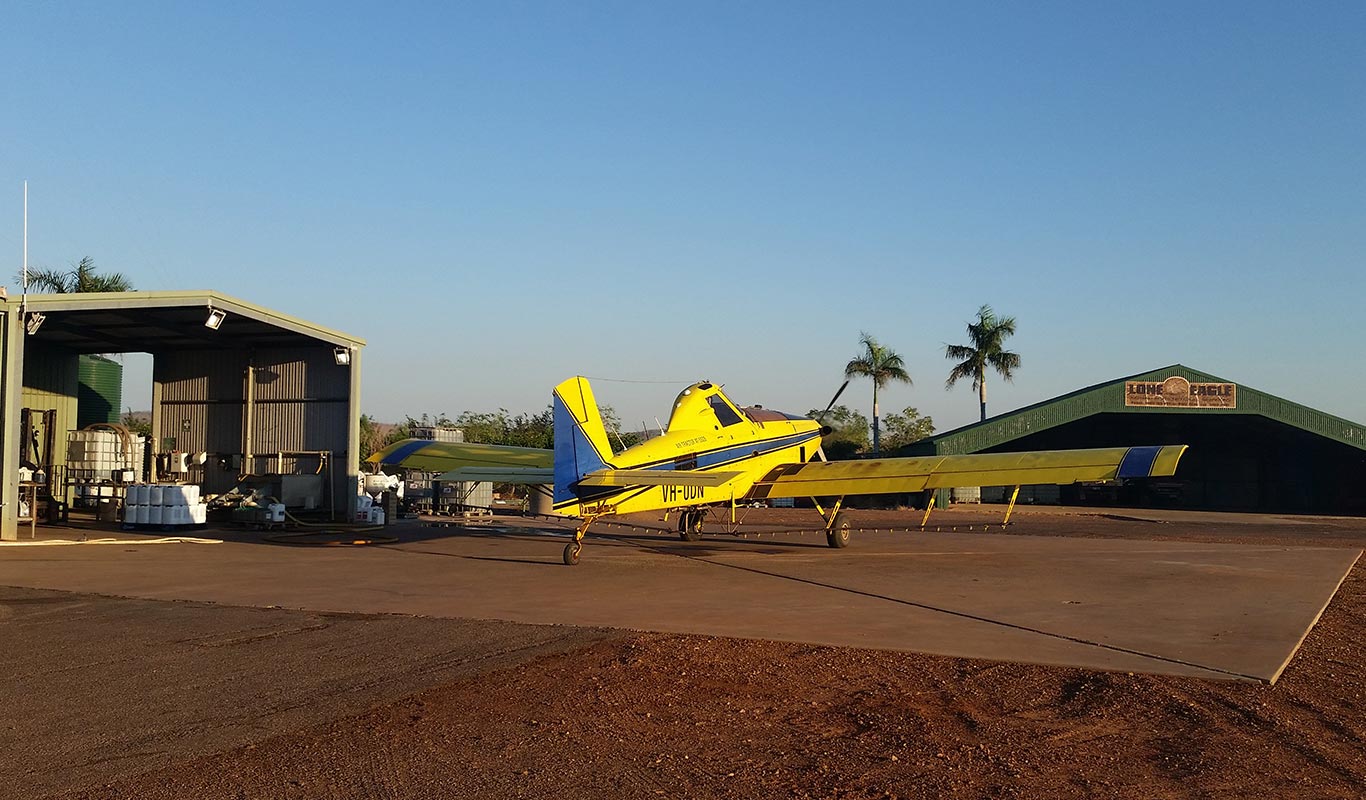
Andrew worked in northern Australia spraying crops on the Ord River irrigation area, ‘home to magpie geese in their thousands. The geese have a thing for sorghum and corn’ and had to be dispersed before a spray run. However, Andrew said, if you find yourself stuck between two layers of migratory geese, as he did on one occasion, ‘with a 1000 above and below me, you just have to maintain course and fly consistently between the two groups’.
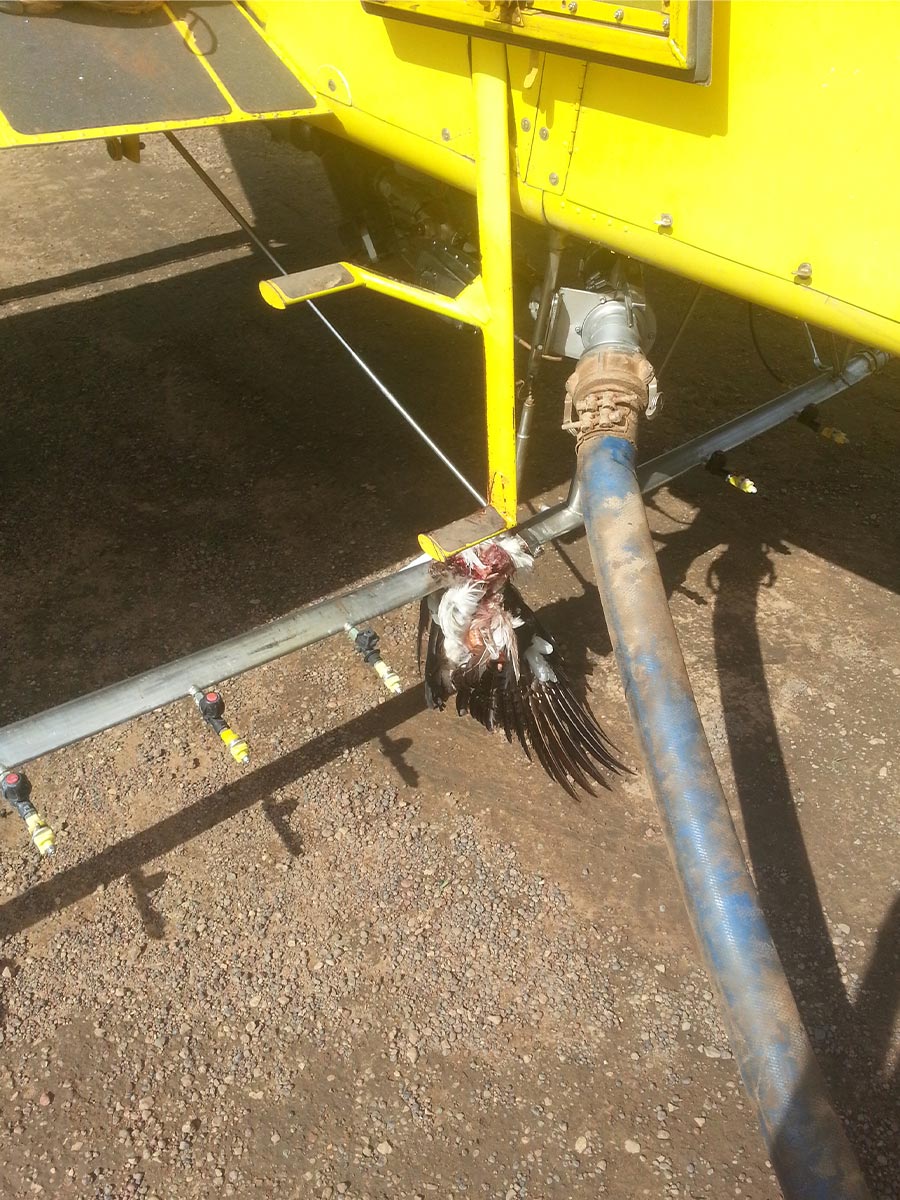
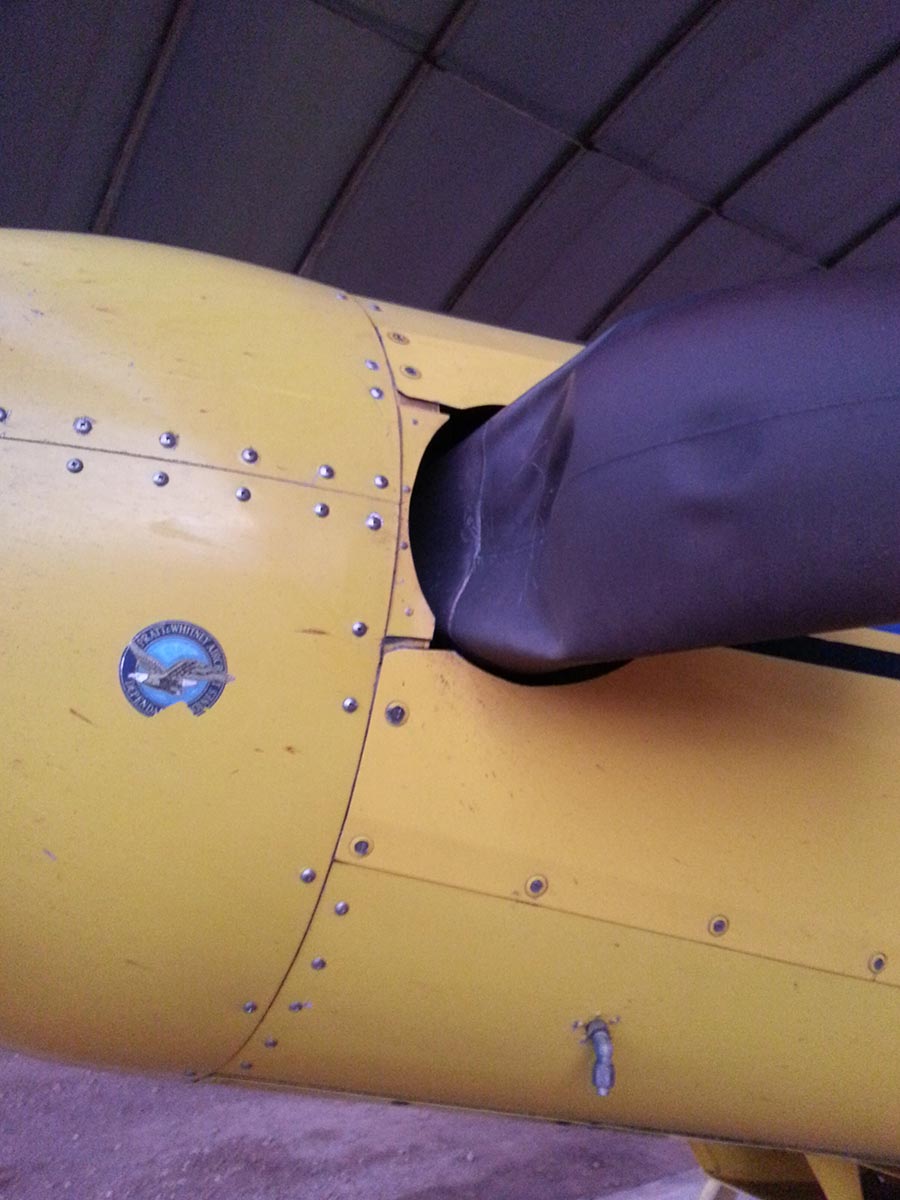
‘Around 150 knots, it’s quite easy to look out for birds. But if you do get a bit close and get tangled up in them, don’t take aggressive evasive action. The birds are trying to get out of your way too! Every time you try to miss them, you’re likely to hit them. Just stay smooth, predictable and consistent in flight. And if it’s too late and an impact is likely, tip your head forwards and hide behind the dash, protect your eyes, it’s hard to land if you can’t see.’
Andrew said, ‘When a bird is on the ground, the larger it is (bustards, pelicans, eagles) the slower their take-offs are. There’s a very good chance that by the time you approach a larger bird on the ground. and it sees you and tries to take off, you’ll be past it before it leaves the ground. With smaller birds though, it’s the opposite – they’ll be airborne much more quickly.’
While the flocking birds may be more predictable, Andrew said the predatory species, such as black kites and wedge-tailed eagles, are not. With a wingspan of 3.8 metres, making it the biggest bird in the Australian sky, the wedge-tailed eagle lives up to its Latin name Aquila audax, or bold eagle. ‘They’re happy to take you on. I have seen many an eagle out of the corner of the cockpit window diving with talons outstretched, ready to have a go.’ Similarly, black kites made aerial firefighting in northern Australia challenging. ‘The kites would be circling on the thermals, looking for insects fleeing the fires. They’re on their own and a bit rogue – you don’t know where they will fly.’
Apart from an understanding of bird behaviour and the environment you are working in, there are some other safety options to consider.
1. Avoid low flying
Leave it to the professionals who have to be down there.
2. Wear a helmet
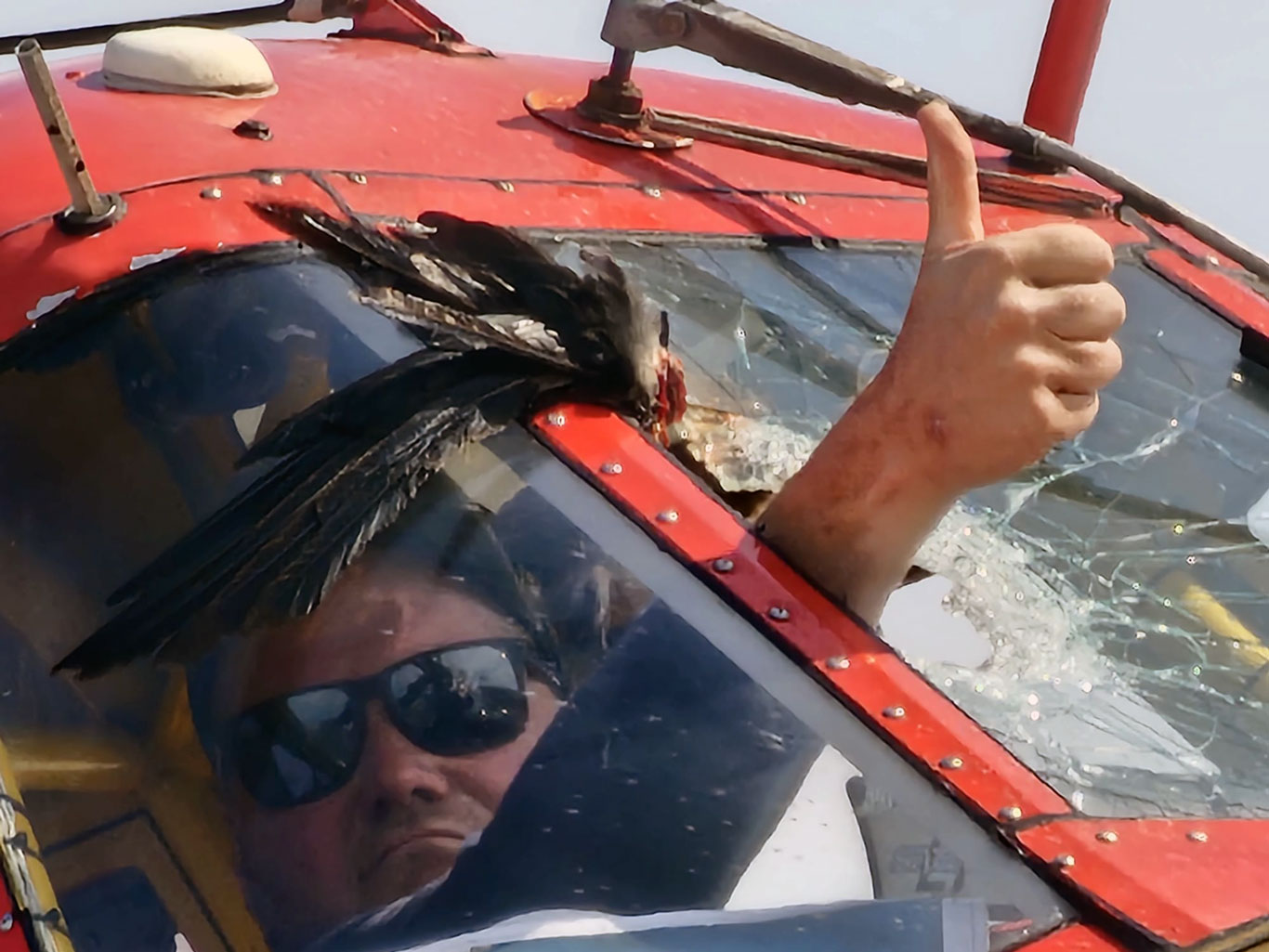
A helmet came in handy for Andrew in his encounter with a crow. ‘I was spraying a canola crop when a flock of crows flew up from the crop. They were all above me, but one panicked and flew down. I had a helmet on; the crow barrelled through the windscreen, hit the corner of my helmet and went past me into the cabin.’
3. Install a tougher windscreen.
Andrew said that when windscreens are damaged in the Air Tractors he flies, the central glass screen is replaced with a Storm Shield™, tested to withstand an impact 8 times that of the Air Tractor OEM windshield samples. ‘They’re expensive, but worth it.’
4. Use pulse lights, navs, strobes, landing lights, anything to make yourself more visible.
Birds will see you before they hear you.
5. Clean your windscreen!
Clean your glasses and every time you clean your helmet visor, clean your secondary one. Countless times in the evening I’ve swapped a tinted visor for a clear or amber one only to find it too dusty and dirty to see through. Helmets are there to protect your eyes too. Being incapacitated by a damaged eye would be a hard one to explain if you didn’t have a visor down.
6. And as an aside, Andrew adds the observation that, if you’re dealing with flocks of birds and flying a standard racetrack pattern in aerial application, the birds will always get stuck in the middle.
‘There's no harm in jumping up a few runs to get the flock out of the centre of the racetrack and go back to fill the missed runs once they are moved out of the application area.’