Jeff presented on the topic at the Australian Aviation Wildlife Hazard Group’s 2026 conference in September. In that presentation, he described the origins of the influenza virus (in wild bird populations, which generally do not show symptoms), its four major strains A, B, C and D and its 200-or-so sub-types. These include the current strain, HPAI H5N1 2.3.4.4b, an influenza A variant. The HPAI refers to ‘highly pathogenic avian influenza’, and this more virulent mutation emerged in 2021 from intensive poultry production – in fact the measure of its virulence, the case fatality rate or CFR, is around 80-100 % in commercial chicken and turkey flocks. It is also quite high in other species, as the global death figures for wildlife, especially seabirds, show.
Globally, to date, the current H5N1 strain of bird flu has affected around 500 species of birds and 100 species of mammals, causing the deaths of millions of wild birds, primarily sea birds; hundreds of thousands of mammals, many of them seals; and birds of prey as well as opportunistic predators such as foxes and ravens.
Confirmed events of H5N1 bird flu in wildlife in Australia as of 12 November 2026, stand at 741: the majority (342) in South Australia, followed by 249 in Victoria, 84 in NSW and 53 in Tasmania. Species primarily affected include seabirds such as greater crested terns and gulls, especially silver gulls. Jeff says that infections to date appear to be confined to coastal systems and to gregarious coastal species with very few reports from inland waterways or freshwater species such as ibis, ducks, geese and swans.
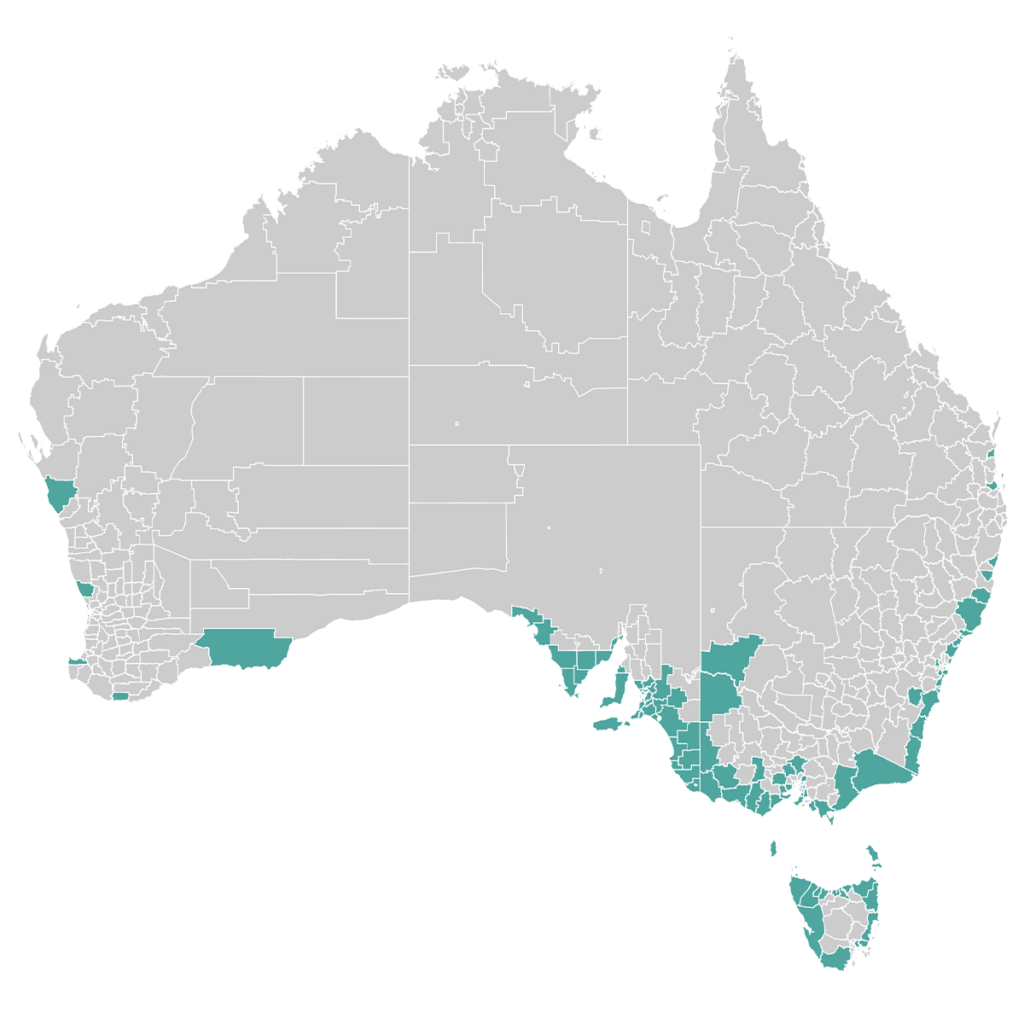
342
South Australia
84
New South Wales
10
Western Australia
2
Queensland
249
Victoria
53
Tasmania
Avian influenza is a nationally notifiable disease. If you suspect an animal might be infected with avian influenza you have a legal responsibility to report it to the Emergency Animal Disease Hotline on 1800 675 888.
Jeff has been analysing the running trends each day and graphically summarising them as monthly event totals by state. The available data suggests the number of new cases in Australia is now consistently decreasing, supporting the idea that this large-scale animal disease outbreak (epizootic) is waning. However, he advises caution in interpreting this data, because of inconsistencies in reporting and monitoring. ‘I’d be cautious about thinking it’s gone until we get 6 months of zero events across the board. Even then there is no guarantee that it won’t return. But it hasn’t been acting as we thought it would.’
New Zealand has adopted a best-practice epizootic management strategy, Jeff says, described on the NZ Government’s Department of Conservation (DOC) website as the DOC ‘working closely with the Ministry for Primary Industries, Ministry of Health, and Health New Zealand as part of a “One Health” approach to respond to the arrival of bird flu in New Zealand.’
Early in the global panzootic, NZ’s DOC identified 5 native bird species at risk because of small populations: the kākāpō, takahē, tchūriwat’/tūturuatu/shore plover, kakī/black stilt and kākāriki karaka/orange-fronted parakeet. In 2025, they completed a world-first research trial on these native bird species showing vaccination was safe and effective and would help protect these at-risk species from bird flu. They have vaccinated about 300 core breeding birds from the 5 species, birds in captivity or, in the case of kākāpō and takahē, on offshore islands, and are working on identifying a second group for treatment.
Do’s and don’ts for aviation personnel
Jeff’s advice in his conference presentation was direct: ‘Don’t be the first Australian to catch it!’ Airport personnel regularly retrieving and disposing of strike carcasses should liaise with their state biosecurity authorities and work out a preferred joint approach to carcass management as the epizootic progresses. Although the risk to humans from this strain of bird flu is considered low, airport personnel should still take appropriate precautions to limit their exposure. They should maintain sensible PPE and containment procedures in dealing with post-strike carcass retrieval, in clearing movement areas, taking forensic samples and cleaning and inspecting engines.
The minimum PPE requirements are:
Gloves – Disposable nitrile gloves. For suspected H5N1, use double gloves: long examination gloves underneath and nitrile gloves outside.
Respiratory – Fit-checked P2/N95 respirator. Mandatory for suspected H5N1, multiple animal mortalities, decomposed carcasses and aerosol generating work such as pressure cleaning.
Eyes/face – Safety glasses or face shield where splashes, dust, fluids, decomposing organic material or maggots may be present.
Clothing – Disposable coveralls or waterproof outer clothing/apron that protects skin and uniform.
Footwear – Rubber or waterproof boots that can be cleaned and disinfected.

For greater protection if H5N1 is suspected, then the procedure needs to minimise contamination by aerosol generating work; e.g. for suspected H5N1/multiple carcasses, heavy snarge sample gathering or cleaning, use double gloves: long examination gloves underneath and nitrile gloves outside, disposable coveralls, an unvented eye guard and virucidal disinfectants such as bleach for cleaning tools and surfaces, and Hibiclens or Isocol for hands and skin. In consultation with your local state biosecurity authority, you should pre-plan under what circumstances, specific methods and who should carry out procedures requiring elevated levels of PPE.
Aviation personnel across the industry – pilots, ATC, ground support, aerodrome reporting officers and aerodrome ops management – should also be familiar with the Communicable Disease Network Australia’s ‘National Guidelines for Avian Influenza’, which can be found at